Day 1 - Classic and Monumental Lisbon
Start on Avenida da Liberdade , the city's big central boulevard. Although primarily known for its luxury shops and hotels, it's a great introduction to the city with its traditional pavement designs, ending at Restauradores Square where you'll find a tourism office, in case you need any information before you start sightseeing.
Just steps away is the landmark Rossio Station with its unusual façade, and Rossio Square , the heart of the city. It's faced by the neoclassical National Theater, and it's where the Portuguese cobblestone pavement designs were born (these similar wave patterns are now famous in former Portuguese colonies, such as in Rio de Janeiro's beaches). Past the baroque fountains you reach Rua Augusta , a pedestrian street usually animated by street artists.
Before you reach the triumphal arch at the end of the street, step into the Design & Fashion Museum . Even if you have no particular interest in the subject, you'll enjoy seeing the creativity of international designers from the recent past and present. Go through the triumphal arch (you may also want to take the elevator to the top for beautiful city views), and you're now in Comercio Square which opens to the river. Take a break on the café terraces or at Cais das Colunas, the quayside area across the road. Next to it is the Ribeira das Naus promenade, the "urban beach" for relaxing on the waterfront.
Now re-energised, walk just a few feet to Cais do Sodré station , where you can catch the train (departing every 20 minutes), a bus or tram 15 to Belém . Just a few minutes later (by train it's just 7 minutes) you'll find yourself by the Jerónimos Monastery . It's a World Heritage monument, and although the church interior with Vasco da Gama's elaborate tomb is impressive, the main attraction is the cloister, which is a marvel of stone carving. Back down the street you'll see the Pasteis de Belém café where you can have one (or several) of Lisbon's famous custard tarts.
Nearby you may also choose to see the fairytale carriages of the Coaches Museum and the iconic MAAT , or may continue back in front of Jerónimos Monastery and check out the modern art by names like Andy Warhol, Picasso and Dali in the Berardo Collection Museum .
Then cross the road using the underpass in front of the garden to reach the landmark Discoveries Monument . Portugal's famous explorers are gigantically sculpted in stone, and from the top are views of the river and surrounding monuments. That includes the Belém Tower , the following destination. It's Lisbon's most iconic monument, and you should take some time to admire its architectural details.
Have lunch at one of the several outdoor restaurants, then take the train, a bus or tram 15 back downtown.
Once again on Comércio Square, go once again through the triumphal arch and head down three blocks to Rua da Conceição for the stop of the popular tram 28 . Take the tram up the hill (you may also walk if your legs can still take it), and your next stop is Portas do Sol . Take photos from this terrace overlooking the city's oldest and most characteristic neighborhood, then walk back up to the castle . You'll be standing over the city, and can rest among peacocks and breathtaking views.
After that you may head back to the Portas do Sol terrace, the starting point of an Alfama walking tour which will take you on a picturesque journey back in time through village-like medieval streets.
Finally, you deserve a good dinner in a beautiful setting, so take a taxi (very inexpensive in Lisbon) to Lx Factory or the Santo Amaro Docks . The dock under the monumental 25 de Abril Bridge with several restaurants facing a marina is the perfect ending to your day.
Day 2 - Contemporary Lisbon
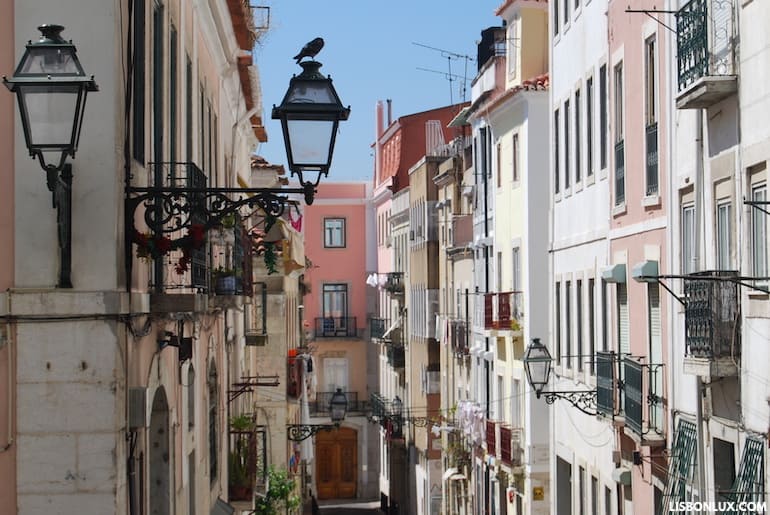
Your day should start back in Rossio Square, from where you then head to Rua do Carmo, a shopping street that's the gateway to the city's most elegant and trendiest districts -- Chiado and Príncipe Real . You'll pass by well-known international brands, but as you walk up Rua Garrett you'll see other local treasures, like the world's oldest bookstore, Livraria Bertrand . A little further up is Café A Brasileira, where everyone stops for coffee in the company of a statue of poet Fernando Pessoa. Another poet is remembered in Camões Square just steps away, and if you continue up the hill you'll reach the city's most photographed street -- Rua da Bica de Duarte Belo. An already beautiful, colorful street descending the hill towards the river is made even more picturesque by the presence of a historic funicular which makes an unavoidable tourist stop. Continue down the street (Calçada do Combro) for your first of two monuments recalling the time when Portugal glittered with Brazilian gold. Entering Santa Catarina Church is unexpectedly stepping into a rich profusion of golden carvings and stucco decoration which never fails to impress, but even more astonishing is the interior of São Roque Church , reached by walking back towards Camões Square, then up Rua da Misericórdia. It consists of several extraordinary chapels, including "the world's most expensive," which is a masterpiece of European art. What look like paintings are actually detailed mosaics surrounded by precious materials, and that alone would make a visit here worthwhile.
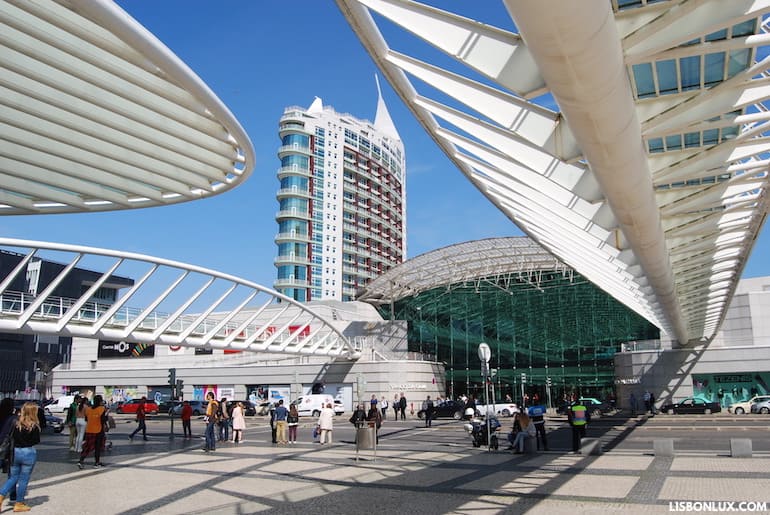
Continue up the hill and you'll reach one of Lisbon's most beautiful and most romantic spots, the viewpoint São Pedro de Alcântara . Have a drink at the kiosk cafés, then continue up Rua Dom Pedro V, a trendy shopping street (with galleries and cafés where you can pause for a meal) that leads to a landscaped square, Praça do Príncipe Real , surrounded by colorful mansions, including the must-see Embaixada shopping gallery. Take a break under the gigantic umbrella-like tree, then continue up the street, now called Rua da Escola Politécnica. It's lined with more attractive shops, and at the end you'll reach the Rato metro station . Take it all the way to Oriente station (by changing to the red line halfway into your journey), where you'll be in Lisbon's showcase of contemporary architecture. On your way, notice the art decorating most of the stations, and take some time to admire the exterior of Oriente Station , designed by world-renowned architect Santiago Calatrava.
Here everyone is drawn to the Vasco da Gama mall (especially for its food court), and to the underwater world of the Oceanarium . Notice the pavement designs surrounding the building, and from there, on the waterfront, you can take a boardwalk called Passeio das Tágides, that gives you a picture-perfect perspective of all the contemporary architecture and of Europe's longest bridge .
Back at Oriente Station you can once again take the metro to either the must-see Gulbenkian Museum or the Tile Museum . The Gulbenkian is reached at the end of the red line at São Sebastião Station, while for the Tile Museum you can go all the way to Santa Apolónia Station then take bus 759, or simply a taxi.
For dinner, choose one of the many restaurants in Bairro Alto, or head to the very popular food hall of the Ribeira Market.
End your night with a cocktail at one of the most beautiful bars in the city.
Day 3 - Great Escapes
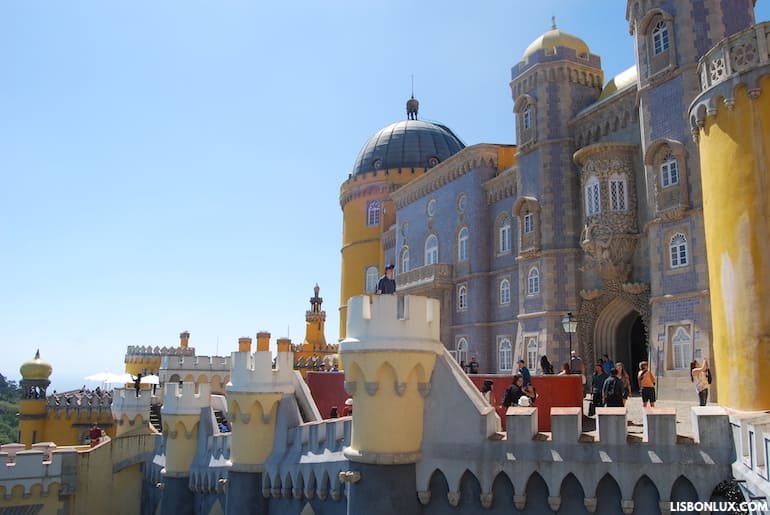
You haven't been to Lisbon if you haven't been to Sintra . This royal retreat is Lisbon's fantasy land, home to fairy tale palaces surrounded by luxuriant vegetation. The must-see is Pena Palace (Europe's first romantic palace, predating Bavaria's famous Neuschwanstein) and the spellbinding Moorish Castle nearby.
Other extraordinary constructions include the esoteric Regaleira Palace and the exotic Monserrate Palace , but if you visit only one other palace besides Pena, make it the National Palace in the center of town. Known for its gigantic chimneys, it's one of Europe's oldest medieval palaces.
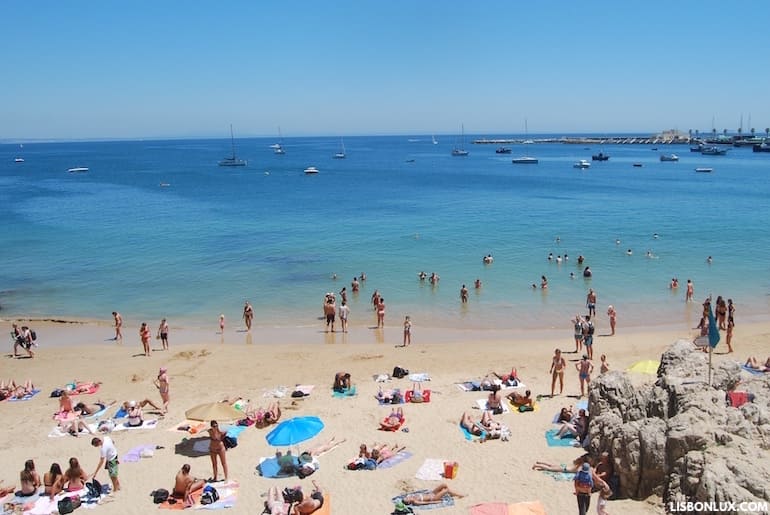
Sintra can be reached in less than 40 minutes from Lisbon's central Rossio Station, and although you can spend an entire day exploring its fantastic monuments, you can also end your day at the beach. Take bus 417 from Sintra or head back to Lisbon for the train from Cais do Sodré to Cascais . You can watch the sun set on the Atlantic, or may even get your feet wet. If weather does not permit sunbathing, there are a couple of noteworthy cultural attractions, like the Castro Guimarães Museum and the Paula Rego Museum .
Walking along the sea you'll eventually reach Estoril , home to Europe's largest casino .
You can dine in Cascais or Estoril, or head back to Lisbon to check out one of the restaurants of its top chefs.
After dinner, have a drink above the city at one of the rooftop bars.
Day 4 - The Soul of Lisbon
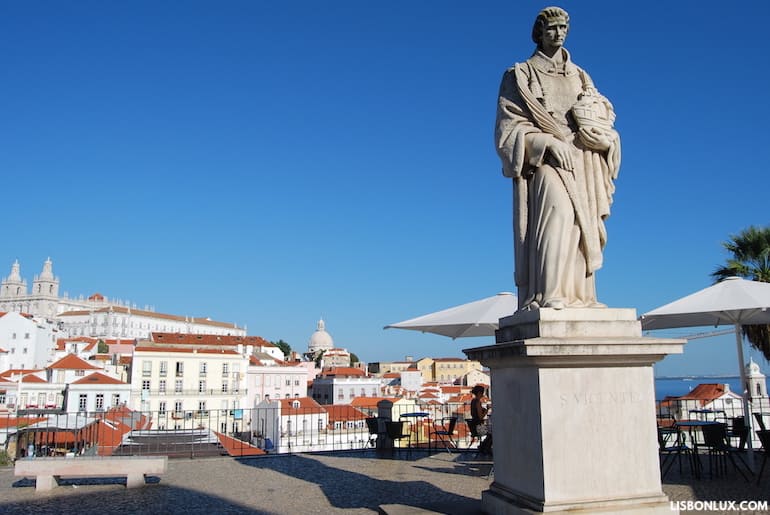
Now that you saw the city's main landmarks, get to know the city itself. You can't leave Lisbon without experiencing what makes it unique, and you should also devote some time to focusing on your personal interests. The must-do is a tour on tram 28, and this time you should start the day in Camões Square, where you should head in the direction of the Estrela Basilica . After visiting its interior and taking a fresh breath at the Estrela Garden across from it, step back into tram 28 now heading in the opposite direction, and go all the way to the Monastery of St. Vincent . You'll be impressed by its tile collection and by the views from its terrace, and you may now begin your own personal Lisbon experience:
Royal Extravagance: If you enjoyed Sintra, you may want to visit Lisbon's Ajuda Palace , or go outside the city to visit the colossal Mafra Palace or the elegant Queluz Palace .
The Age of Discovery: If you're curious about Lisbon's pioneering role in world exploration, don't miss the Ancient Art Museum , and you may also enjoy the Maritime Museum , the Orient Museum and the complete Age of Discovery tour.
Green Lisbon: If you enjoyed the beach in Cascais, you may also enjoy the fresh air in Lisbon's parks and gardens, many of which contain plants and trees from all over the world, dating from Portugal's colonial times.
The Scenic City: There isn't another city more scenic than Lisbon, so if you enjoyed the views from Portas do Sol and São Pedro de Alcântara, look for the many other viewpoints in the city for photos, relaxation and inspiration.
Tile Hunting: If you developed a taste for the singularity of Lisbon's tiled art, and especially if you want to take some souvenirs, check out the city's top tile attractions and shops.
Shop 'til You Drop: Shopping in Lisbon is a cultural experience. The city offers many original products and spaces that maintain the charm of yesteryear. Most are found in Chiado and Baixa, and you may want to visit the city's most beautiful shops (such as "A Vida Portuguesa" and "Confeitaria Nacional"). The world-famous luxury soaps, cork design and ceramics are the best buys.
The Local Flavors: You don't have to be a major foodie to want to take some time to enjoy Lisbon's cuisine. In addition to the famous pastries, look for original drinks and wines at the cafés, wine bars and restaurants, where you can also discover "petiscos," a Portuguese version of what the world has come to know as "tapas." Either at star-chef restaurants or at a traditional neighborhood eatery, find the best spots to satisfy your taste buds.
The Fado: Listening to fado music is a mandatory Lisbon experience. This World Heritage musical style is essentially an emotive recital of poems which you don't need to understand the words to feel. Although most are touristy, Lisbon's "fado houses" are memorable places to end your visit to the city, making you leave with the understanding of the nostalgic feeling of "saudade."
More Days
Most people only have 3 or 4 days to visit the city, but if you're on a longer stay you may split a couple of the days above into two. You may, for example, spend an entire day in Sintra and another in Cascais, or dedicate two whole days to following your personal interests and going off the beaten path. Another option is to split the first suggested day into two, as you can easily stay all day in Belém, and another around the castle and Alfama.
Many also choose to use Lisbon as a base for exploring some of Portugal's major attractions easily accessible from the capital, such as Évora , Óbidos and the beaches in the area.