Lisbon is one of the very few cities in the world with its very own sound. New Orleans has its jazz, Buenos Aires dances tango, Rio de Janeiro moves to samba, and Seville has flamenco, but Lisbon's fado is not a dance or even music. Fado is the opening of the heart, the exposure of emotions to the sound of a guitar. It's revealing mostly nostalgic and melancholic feelings, but also a great sense of hope and celebration of the complexities of life (and love) amid pain. It's essentially a heartfelt recital of poems, a chant, or a cry, which is why you don't really need to understand the lyrics to feel it. You sense it in the singer's voice and face (usually with the eyes closed and head tilted back), in the darkness (as in mourning) of the outfit, and in the melodramatic pauses in between. It should be performed in a very low-lit, quiet space, although there are also more upbeat fados, usually about everyday life and characters of Lisbon's oldest neighborhoods.
It all started as what today we'd call urban music, in the early 1800s, in the streets and brothels of Lisbon, although some historians believe the real origin predates to homesick sailors at sea and to the slaves in Brazil. There is also an evident Moorish influence, but that may have been introduced by Amália Rodrigues, the diva who was influenced by Andalusian music.
Listening to Fado at Home
If you'd like to listen to some recordings at home, the ones to look for are those of Amália Rodrigues. She took the Portuguese soul around the world in the 20th century, but since her death in 1999 a new generation of fadistas (especially Grammy-nominated Mariza) have kept her style alive while also broadening the sound with new instruments. In addition to Mariza, other names to look out for are Ana Moura, Carminho, Cristina Branco, Kátia Guerreiro, Mafalda Arnauth, and Mísia.
Listening to Fado in Lisbon
With only a couple of exceptions, fado clubs today (called "casas de fado" or "fado houses") are also restaurants, but you don't exactly have to dine in order to listen to the performances. You may have just a bottle of wine, but remember that at most clubs there is usually a minimum charge of between 25 and 50 euros. There are usually several singers throughout the night, so don't worry if you don't like the first one you hear. Some places are more informal and less tourist-oriented, often home to "fado vadio," impromptu fado performances from guests. In these cases a perfect voice, sobriety, or enormous talent is not needed, but simply the spirit and the love of the tradition to get up and sing. Good places for such fado is Tasca do Chico in Bairro Alto and A Baiuca in Alfama (see below). Performances end with massive applause and cheers of "É Fadista!," meaning "That's a Fado singer!"
Fado fanatics or those who'd like to know more about it should visit the Fado Museum and the Amália Rodrigues House-Museum.
A Baiuca
Rua de São Miguel, 20 (Alfama)
218 867 284
instagram.com/abaiuca_
Opens every day
Price per person: €20
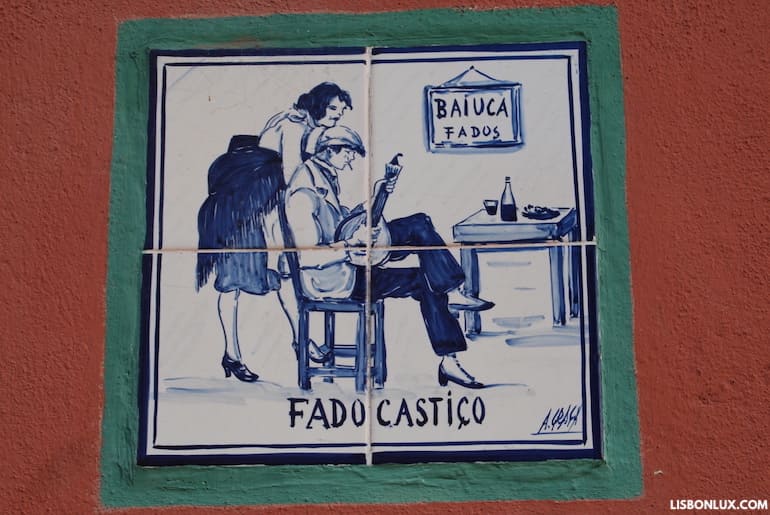
This family-owned restaurant is a favorite for its modest and very informal space where amateur fado performers spontaneously get up and sing. There are only about half a dozen tables for you to try the Portuguese cuisine, but if you're walking around Alfama at night you just may take a peek inside and catch a performance.
A Severa
Rua das Gáveas, 51 (Bairro Alto)
213 428 314
www.asevera.com
Closes on Wednesdays
Price per person: €45
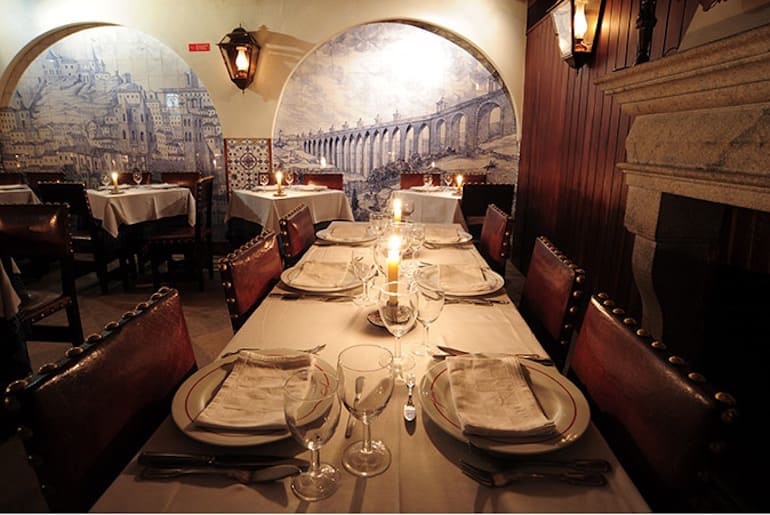
Named after the first major fado star, this restaurant opened in 1955, and has remained in the same family for three generations. Little has changed since its first days, as it continues to select the most classic fados and to serve Portuguese cuisine in a traditional space decorated with beautiful tile panels and old photographs of Lisbon.
Adega Machado
Rua do Norte, 91 (Bairro Alto)
213 422 282
www.adegamachado.pt
Opens every day
Price per person: €50
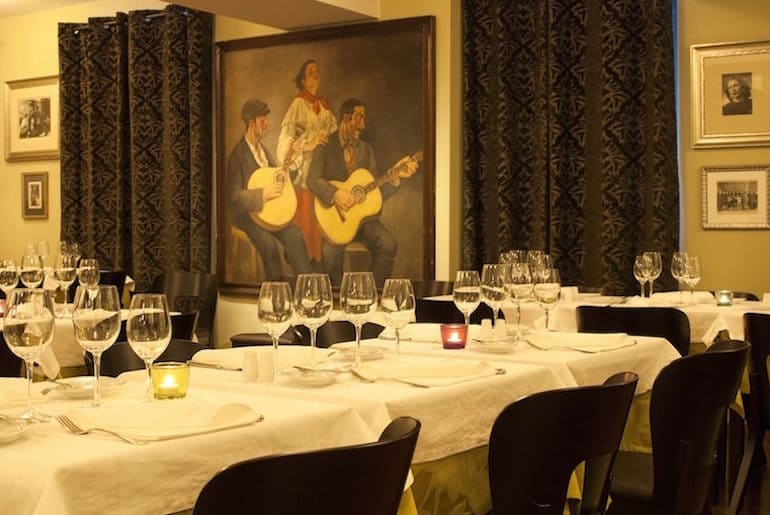
It’s the oldest fado house in Lisbon, but its history begins in Paris. In 1937, guitarist Armando Machado joined a group of fado singers who traveled to the French capital for a show honoring the last Portuguese queen, who was exiled in France. That was when he had the idea of opening a place in Lisbon where fado could be heard on a daily basis. The “Machado wine house” opened on that same year, and eight decades later it’s still one of the most popular spots in Bairro Alto. Today, in addition to the resident cast, it presents guest artists, and, after a renovation in 2012, the space is divided into three areas -- the main room where dinners are served, a modern wine cellar for tapas and wine by the glass, and an outdoor terrace.
Café Luso
Travessa da Queimada, 10 (Bairro Alto)
213 422 281
www.cafeluso.pt
Opens every day
Price per person: €45
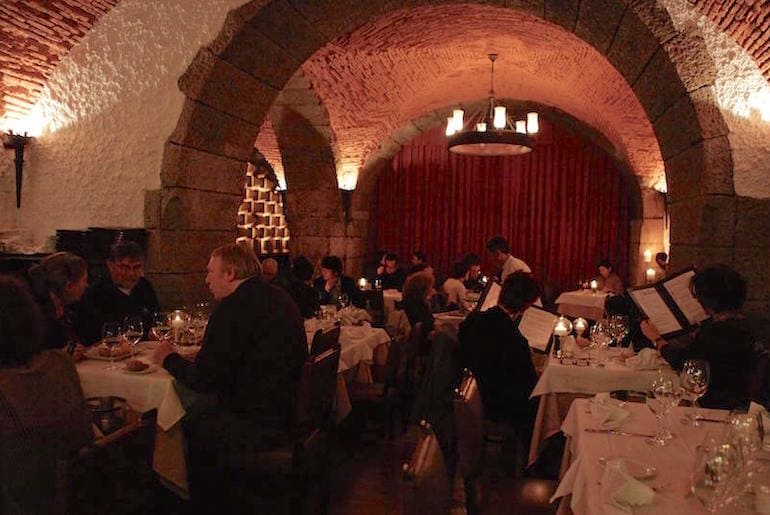
Café Luso is one of the most iconic fado houses in Lisbon. It’s the city’s second oldest, in business since 1940 (it opened as a café in 1927, on Avenida da Liberdade). As a fado house it took over a former cellar and stable in Bairro Alto. It preserves the vaulting of the original building, which gives it good acoustics. The biggest names of fado have performed here, including Amália Rodrigues early in her career. In the 1990s, under a new management, it added folklore from the north of Portugal, but today it’s back to focusing almost exclusively on fado.
For dinner, it serves traditional Portuguese cuisine.
Casa de Linhares
Beco dos Armazéns do Linho, 2/Rua de São João da Praça (Alfama)
910 188 118
www.casadelinhares.com
Opens every day
Price per person: €50
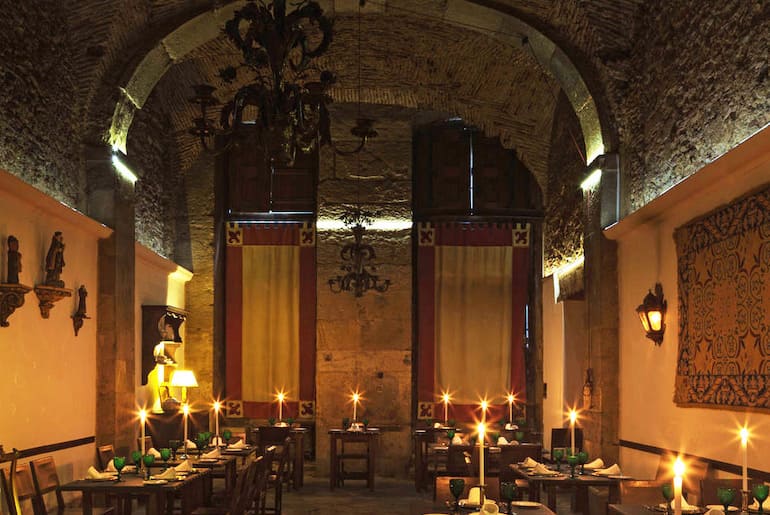
The former residence of the Counts of Linhares (aristocrats descended from King Fernando I) is now this rather sophisticated fado house. Much of the original building (where poet Luís de Camões also once lived) collapsed in the 1755 earthquake, but the high ceiling and brick vaults of the main room have survived. One of the great contemporary fadistas, Ana Moura, was a regular performer, and had Mick Jagger, Keither Richards and the other "Rolling Stones" in the audience, which led to an invitation to the fado singer to participate in one of their concerts. The resident cast continues to feature some of the most renowned fadistas, and for dinner there’s a good selection of traditional Portuguese dishes, including several appetizers.
Clube de Fado
Rua de São João da Praça, 94 (Alfama)
218 852 704
www.clubedefado.pt
Opens every day
Price per person: €50
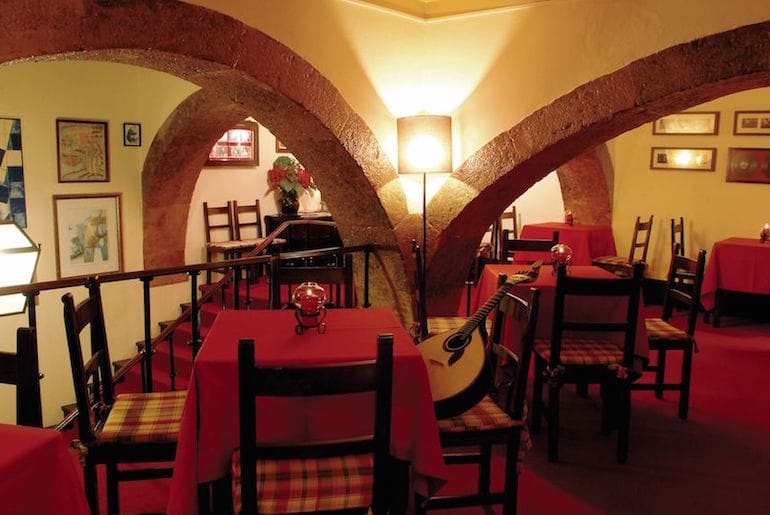
This "club" was where many young singers and musicians had their start, after having been discovered by Mário Pacheco, a master of the Portuguese guitar. One of the biggest names in the new generation of fado singers, Mísia, was one of those whose career originated here. The space, located a few steps from behind the cathedral, preserves centuries of local history, with old stone columns and even a Moorish well. Throughout its over two decades, it has been one of the most recommended fado houses, and for that reason it has attracted local and international celebrities (Woody Allen is perhaps the most famous name). The cuisine focuses on Portuguese traditions, with different cod and seafood dishes.
Fama d'Alfama
Rua do Terreiro do Trigo, 80 (Alfama)
218 862 609
famadalfama.pt
Opens every day
Price per person: €50

Decorated with pieces that belonged to the queen of fado, Amália Rodrigues, this restaurant is managed by renowned fado singer Joana Amendoeira, who selects the best contemporary voices for the intimate space. The stage is by a piano facing the dining room, which is often used to accompany the Portuguese guitar. The menu consists of traditional Portuguese dishes, with some surprises.
Maria da Mouraria
Largo da Severa, 2-2B (Mouraria)
218 860 165
instagram.com/maria.da.mouraria
Closes on Mondays and Tuesdays
Price per person: €50
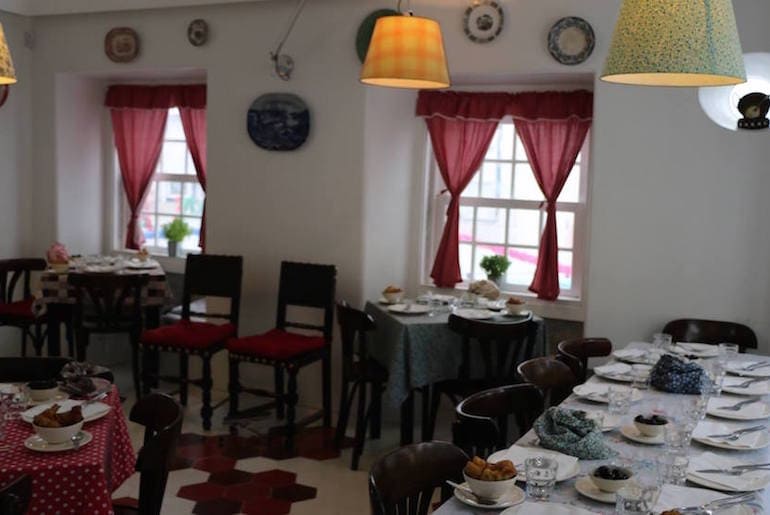
It was first named “Casa da Severa” because it occupies the house where Maria Severa lived (she’s recognized as the first great fado singer). The house was completely renovated and opened as a fado restaurant in 2013. It changed its name so it’s not associated with another fado house, the “A Severa” in Bairro Alto (see above). Decorated with pieces from the early- and mid-20th century (old radios, dolls, sewing machines) and with paintings provided by the Fado Museum, it’s an attractive place, where petiscos (tapas) and dishes of traditional Portuguese cuisine are served. The cast has included some big names, like Helder Moutinho.
Mesa de Frades
Rua dos Remédios, 139A (Alfama)
917 029 436
www.mesadefrades.pt
Opens every day
Price per person: €60
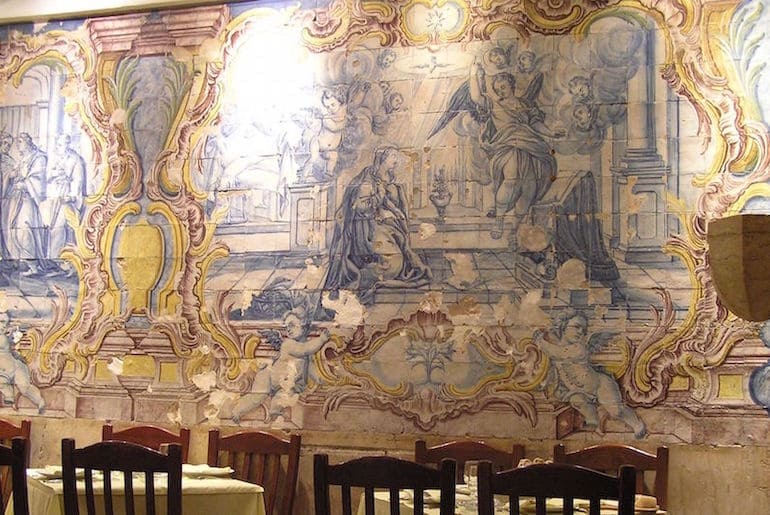
The most intimate fado club in the city is a former chapel that preserves the 18th-century interior. It’s where pop star Madonna went for nights of fado when she moved to Lisbon, and ended up doing a duet with Celeste Rodrigues (the younger sister of fado diva Amália Rodrigues), which she posted on social media. The small space with baroque tile panels is also a restaurant, serving traditional Portuguese cuisine along with the sounds of the guitars. It always has a good lineup of singers, and is often a meeting point for professional artists.
O Faia
Rua da Barroca 54-56 (Bairro Alto)
213 426 742
www.ofaia.com
Closes on Sundays
Price per person: €55
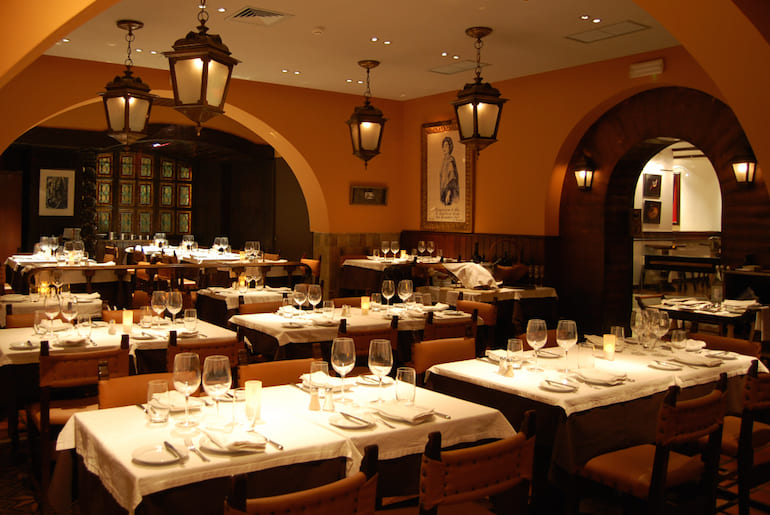
It opened in 1947 with another name, but this spot has always been a fado house. It’s "O Faia" since the 1990s, and is where many tourists end up having a cultural experience mixing music and local cuisine. Dinners are accompanied by four fadistas and two musicians, and the menu is divided into appetizers, soups, salads, vegetarian dishes, fish and seafood dishes, meat and desserts.
Parreirinha de Alfama
Beco do Espírito Santo, 1 (Alfama)
218 868 209
www.parreirinhadealfama.com
Closes on Mondays
Price per person: €40
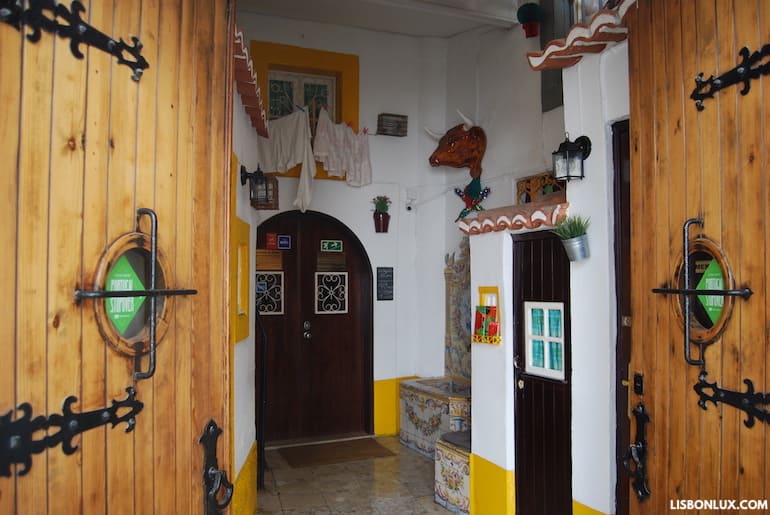
Hidden in a corner across from the Fado Museum, this fado restaurant, in business since the 1950s, is known to be one of the most authentic in the city. It was owned by a famous singer, who often performed along with the resident fadistas (Amália Rodrigues was one of them). The cuisine is Portuguese, with flavors from different parts of the country.
Senhor Fado
Rua dos Remédios, 176 (Alfama)
218 874 298
www.sr-fado.com
Closes on Mondays, Tuesdays and Fridays
Price per person: €35
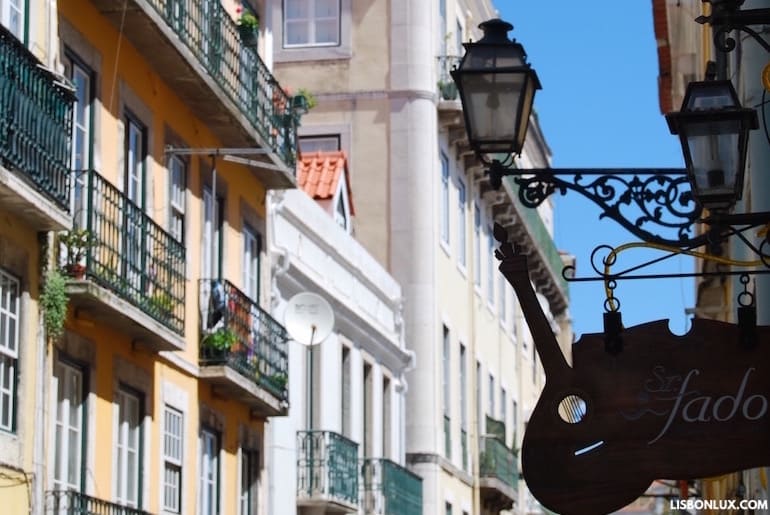
This family-run restaurant treats you like a friend, serving traditional cuisine and presenting live fado performances after the meals. The fado starts when the lights are dimmed, and the performers (guitarist and singer) just may be the friendly owners themselves.
Senhor Vinho
Rua do Meio à Lapa, 18 (Lapa)
213 972 681
www.srvinho.com
Opens every day
Price per person: €50
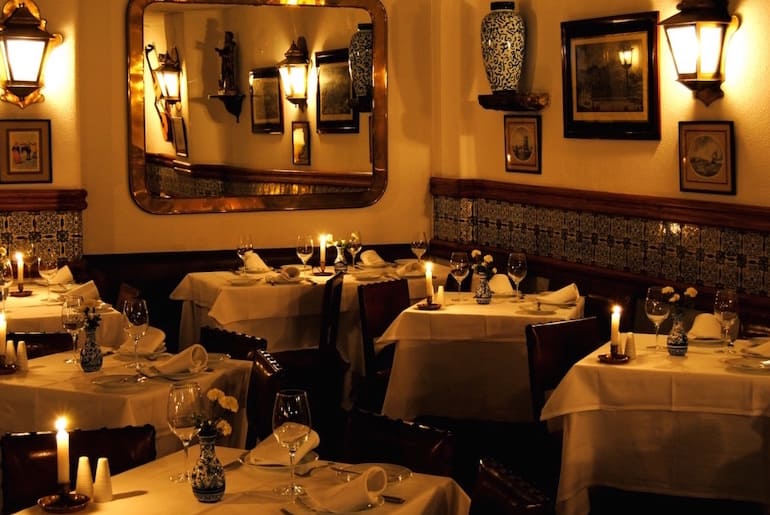
It’s located in Lapa, far from the more traditional neighborhoods and tourist attractions, but is considered the "cathedral" of fado. That’s because since opening in 1975 it has promoted great talents like Mariza, Ana Moura and Camané. The owner is another familiar name, singer Maria da Fé, who has always made sure it remains one of the main stops in a fado tour of Lisbon. For dinner, the menu includes house specialties, fresh fish and steaks.
Tasca do Chico
Rua do Diário de Notícias, 39 (Bairro Alto)
961 339 696
instagram.com/tascadochico_
Opens every day
Price per person: €15
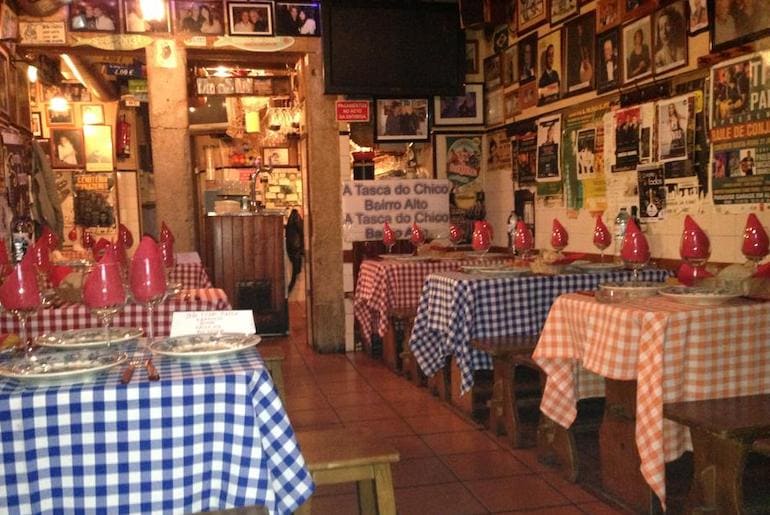
This bar opened in 1993 is known for its amateur, impromptu fado performances in a cheerful, down-to-earth ambience. Even when there's no fado, this is as close to a traditional Lisbon bar as it gets. In addition to reasonably-priced drinks, it has a famous roasted sausage ("chouriço assado"), which can be said to be the second house specialty.