LIVING THE BEST OF LISBON|VIVER O MELHOR DE LISBOA


THE 10 MOST BEAUTIFULLY TILED FAÇADES IN LISBON

AS 10 MAIS BELAS FACHADAS DE AZULEJOS EM LISBOA

The interior of every palace or church in Lisbon seems to have at least a small tile panel, but even the most humble homes often feature tiles on their façades. While most are mass-produced geometric images, many are authentic works of art. Below are ten of the most outstanding, but you’ll find countless others and will have your own favorites as you walk around the city.

Encontra-se pelo menos um pequeno painel de azulejos em qualquer palacete ou igreja de Lisboa, e mesmo as casas mais humildes têm sempre pelo menos um azulejo nas suas fachadas. A maioria destas peças são produzidas em série com figuras geométricas, mas muitas outras são verdadeiras obras de arte. Aqui apresentamos dez das mais extraordinárias, mas encontram-se muitas outras ao caminhar pela cidade.

Azulejos, Tiles, Lisbon

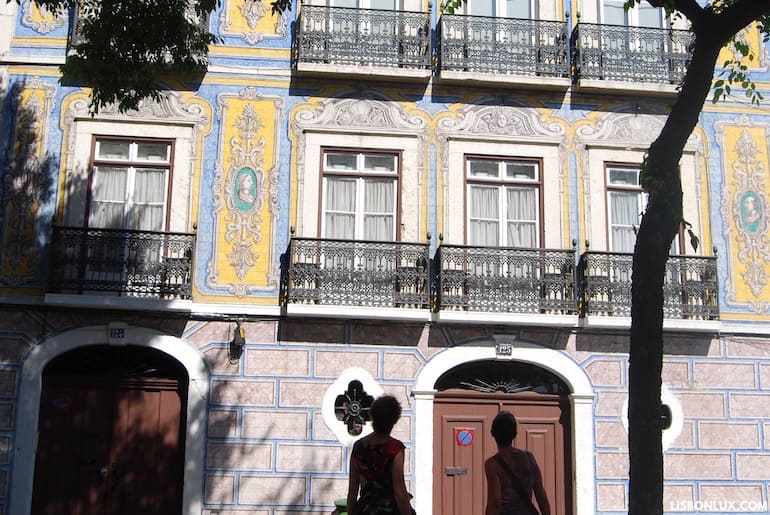
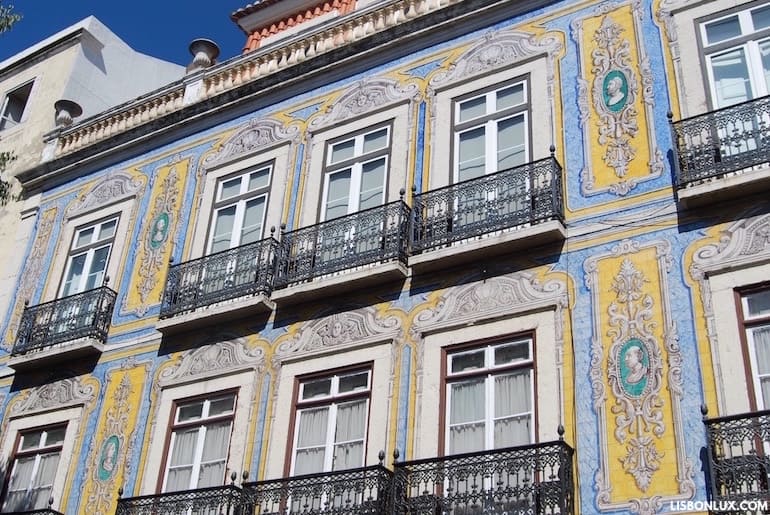
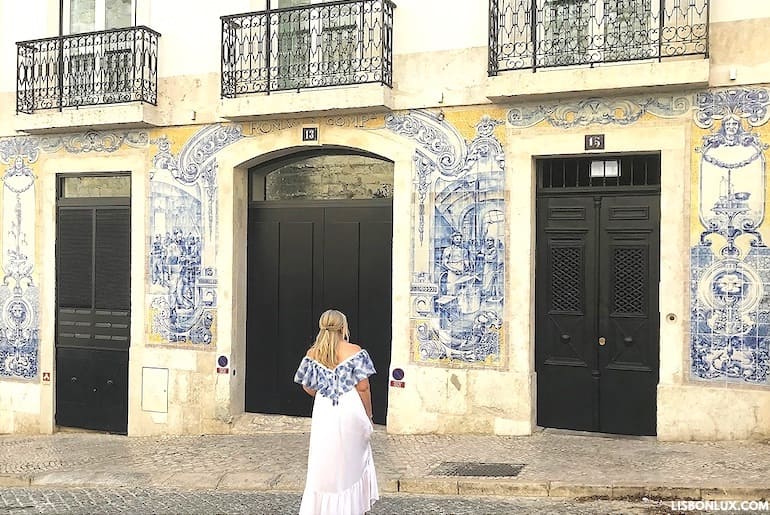
Arguably Lisbon’s most beautiful tiled building, it’s located by the National Pantheon close to the site of the city’s flea market. It dates from 1860, created in the romantic style of the time, with Baroque inspiration. Blue, yellow and white are the colors used to depict and frame busts imitating marble.

Provavelmente a mais bela fachada de azulejos em Lisboa encontra-se perto do Panteão Nacional junto ao local da Feira da Ladra. Data de 1860, criada ao gosto romântico da época, de inspiração barroca. Azul, amarelo e branco são as cores usadas para representar bustos e molduras imitando mármore.

Azulejos, Tiles, Lisbon

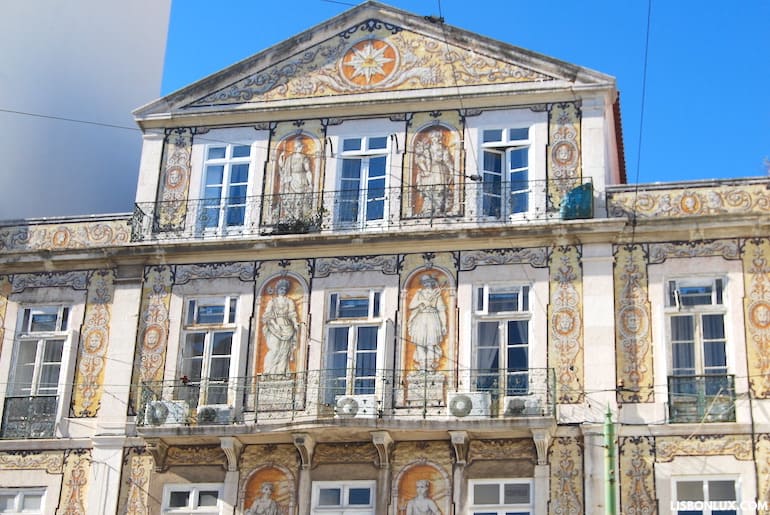
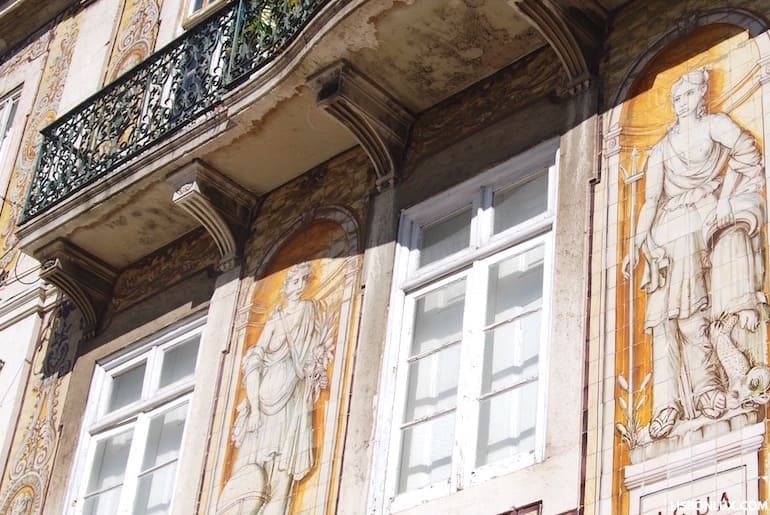
This is the most photographed tiled building in Lisbon, found in the center of the city, in Chiado. Dating from 1863, it’s completely covered in mostly yellow and orange tiles depicting mythological images that represent Earth, Water, Science, Agriculture, Commerce and Industry. At the top is a star with an eye in the center, symbolizing the Creator of the Universe.

Este é o edifício de azulejos mais fotografado da cidade, pois encontra-se mesmo no centro, no Chiado. Data de 1863 e é completamente forrado com azulejos amarelos e laranja, retratando imagens mitológicas que representam a Terra, Água, Ciência, Agricultura, Comércio e Indústria. No topo vê-se uma estrela com o olho da Providência.

Azulejos, Tiles, Lisbon

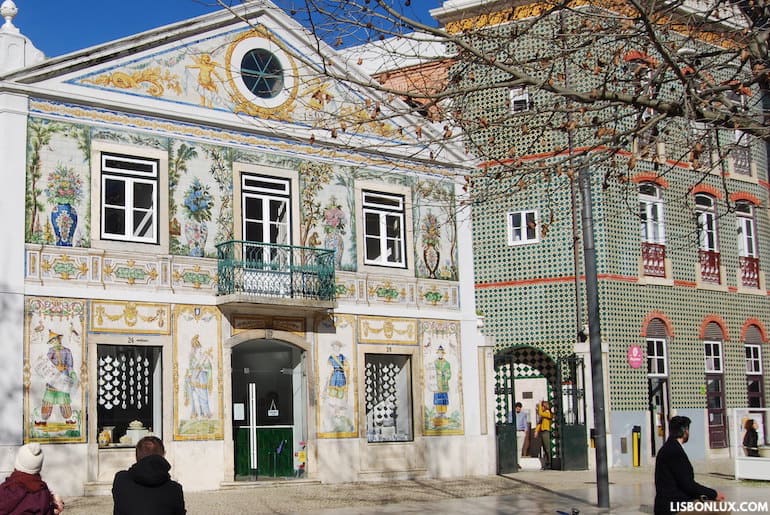
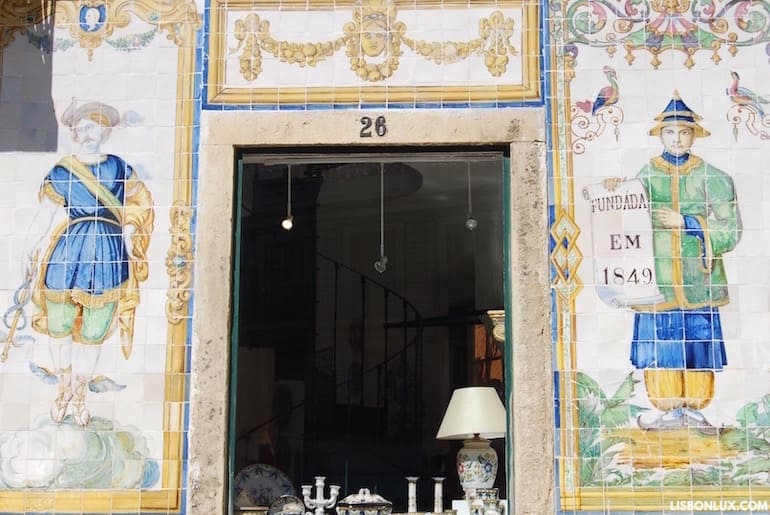
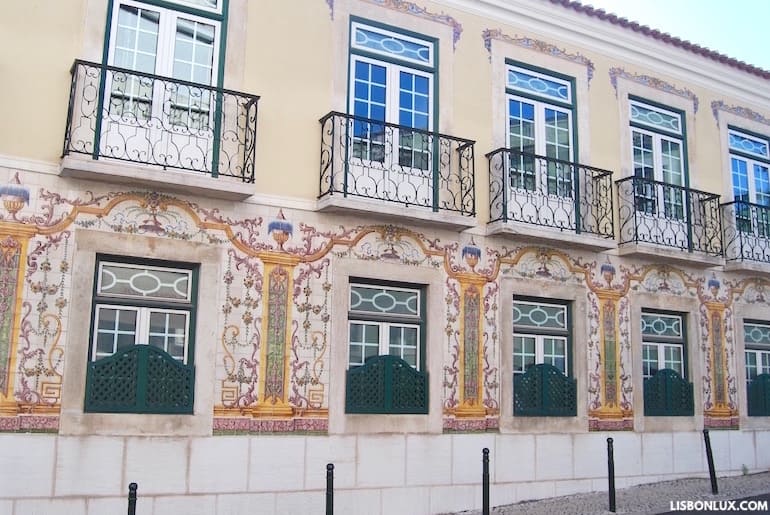
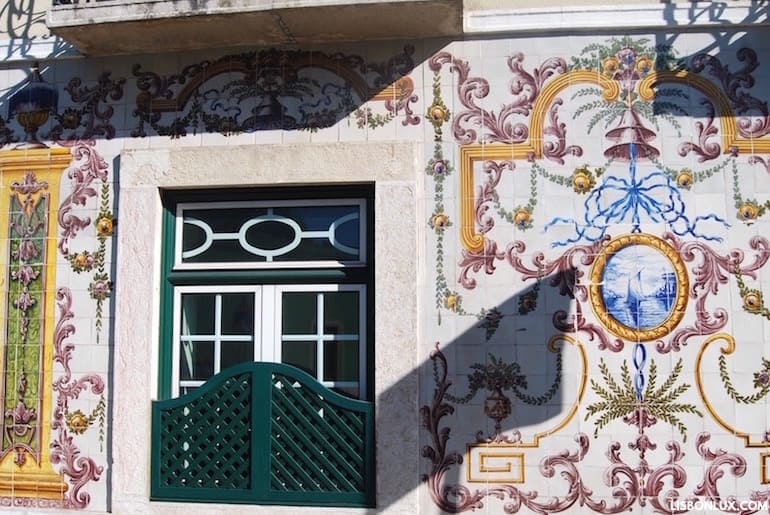
Located in Largo do Intendente, this building was covered with beautiful tile panels in 1865. Although originally built as a private residence, it now belongs to the Viúva Lamego ceramics factory which displays its art inside. The romantic images on the façade include potted plants and Asians recalling Portugal’s trade with the East.

Localizado no Largo do Intendente, este edifício foi revestido por azulejos em 1865. Foi construído como residência privada, mas mais tarde ficou nas mãos da fábrica de cerâmica Viúva Lamego que ainda o ocupa, apresentando as suas obras no interior.
As imagens românticas na fachada incluem vasos de plantas e figuras asiáticas que recordam o comércio entre Portugal e o Oriente.

Azulejos, Tiles, Lisbon

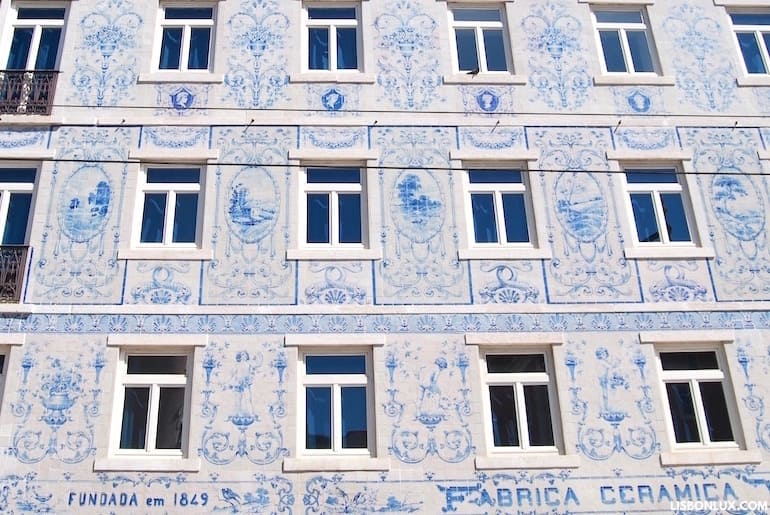
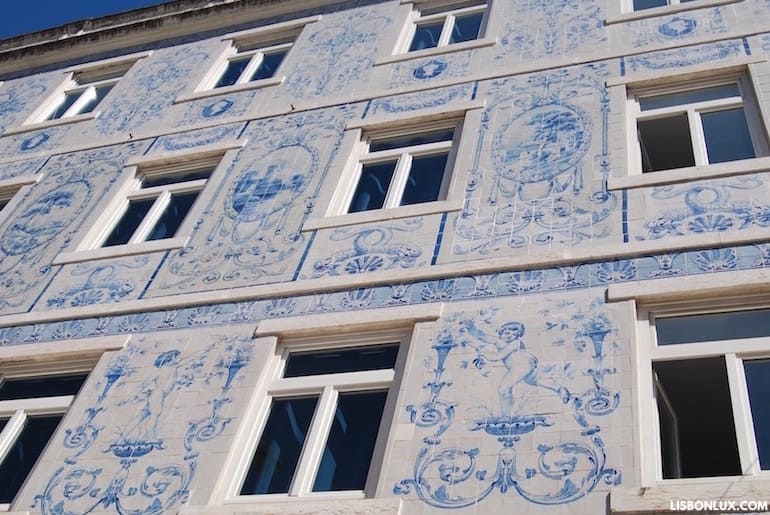
Facing Avenida Almirante Reis, behind the more famous façade mentioned above, is this one all in blue and white. It’s also of the Viúva Lamego factory and this is where the ceramics were produced for many years, including many of the pieces that now cover the city’s metro stations.

Virado para a Avenida Almirante Reis, por trás da fachada mais famosa mencionada acima, este lado do edifício é todo em azul e branco. É também da fábrica Viúva Lamego e foi aqui que as suas cerâmicas foram produzidas durante vários anos, incluindo muitos dos azulejos que hoje decoram as estações do metro da cidade.

Azulejos, Tiles, Lisbon

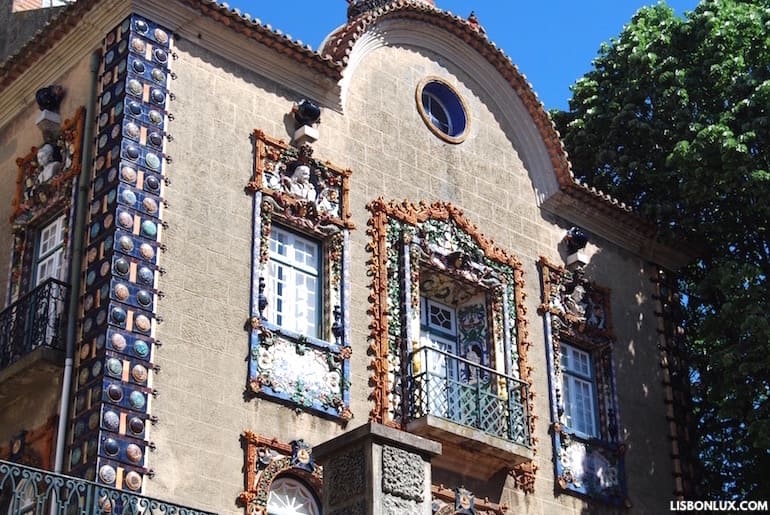
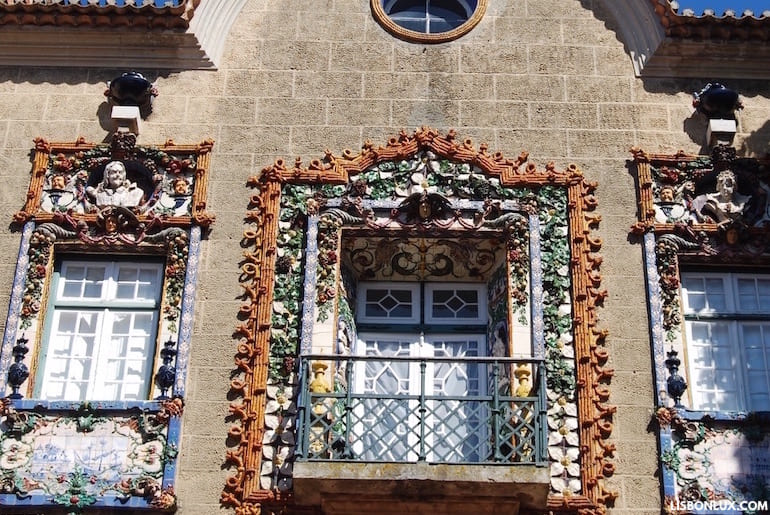
This mansion stands between grand embassy buildings in the Lapa district (Rua do Sacramento à Lapa). It was built in the late 1800s as a noble residence and its neo-Manueline windows are covered in tiles and ceramics. Half baroque, half art nouveau, it’s symbolic of the late Romantic period.

Esta mansão situa-se entre grandes embaixadas na Lapa (Rua do Sacramento à Lapa). Foi construída nos finais do século XIX como uma residência nobre e as suas janelas neo-manuelinas estão cobertas de azulejos e peças de cerâmica. Meio barroca, meio art nouveau, é uma decoração simbólica do final do período romântico.

Azulejos, Tiles, Lisbon

Dating from the 1700s, this mansion was the residence of the Counts of Sabrosa. Found in the Lapa district (Rua do Possolo, 76), it’s now occupied by the embassies of Finland and Andorra.

Construído no século XVIII, este palacete dos Condes de Sabrosa encontra-se na Lapa, na Rua do Possolo (número 76) e é agora ocupado pelas embaixadas da Finlândia e de Andorra.

Azulejos, Tiles, Lisbon

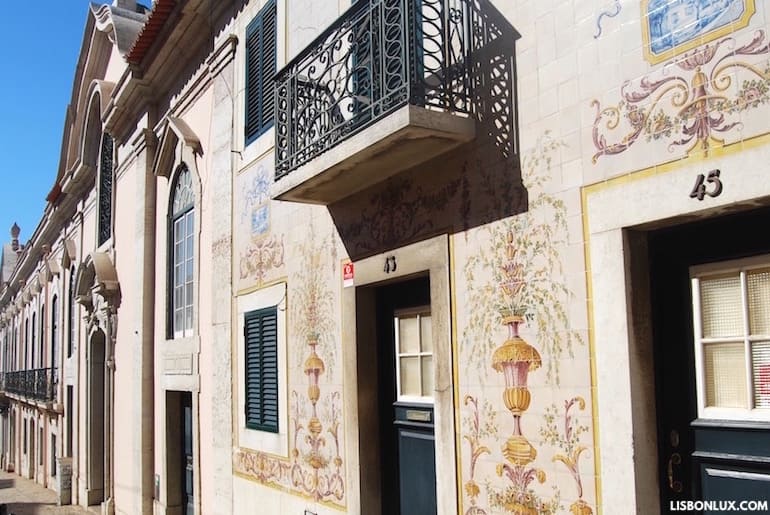
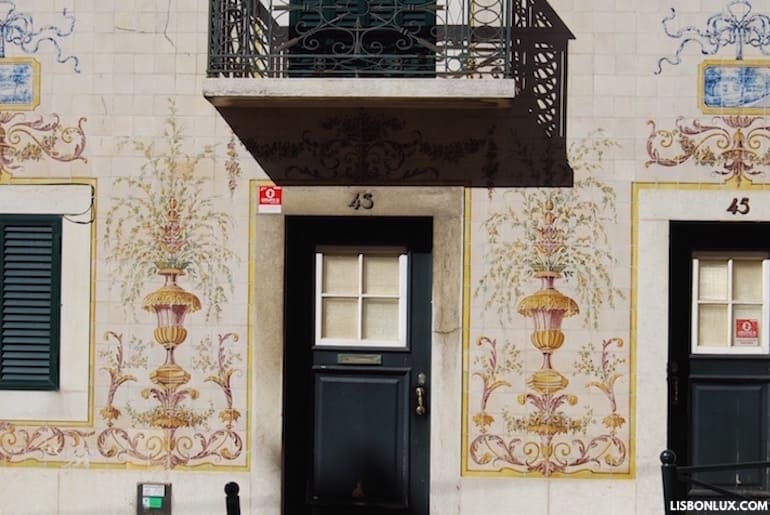
You’ll pass by this small house if you ride tram 25 but you probably won’t notice it. It’s actually not that small, but it’s dwarfed by the palatial building next to it that draws all the attention. It’s on Rua de São Domingos (numbers 43 and 45) and its façade is covered in tiles with floral motifs.

Passa-se por este pequeno edifício no eléctrico 25, mas poucos dão por ele, pois toda a atenção vai para o palacete ao seu lado. Encontra-se na Rua de São Domingos (números 43 e 45) e a sua fachada é revestida a azulejos com motivos florais.

Azulejos, Tiles, Lisbon

This building down the street from the Ancient Art Museum (Rua das Janelas Verdes, 70-78) is covered with tile reliefs. It’s Art Nouveau decoration that resulted from a more “modern” (early 1900s) taste after the romantic and baroque tiles that were previously used in the city’s grandest façades.
Este edifício perto do Museu Nacional de Arte Antiga (na Rua das Janelas Verdes, 70-78) é coberto de azulejos relevados com elementos Arte Nova. Resultou de um gosto mais “moderno” (princípio do século XX), depois de opções mais românticas e barrocas utilizadas nas mais grandiosas fachadas da cidade até aí.

Azulejos, Tiles, Lisbon

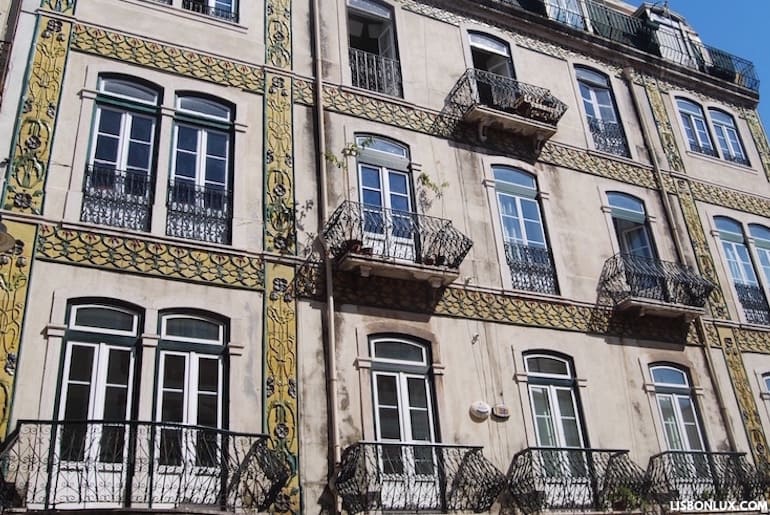
Instead of having images cover the entire façade, this curious building in Chiado (Rua Nova da Trindade by Calçada do Duque) simply uses tiles with floral motifs to frame the windows. The result is elegant and romantic.

Em vez de imagens em toda a fachada, este curioso edifício no Chiado (Rua Nova da Trindade perto da Calçada do Duque) simplesmente usa azulejos com motivos florais para emoldurar as janelas. O resultado é elegante e romântico.

Azulejos, Tiles, Lisbon

Found by the Senhora do Monte viewpoint (Rua da Senhora do Monte, 38), this building looks like just another typical Lisbon building with a façade of patterned tiles. That is until you look closer and notice the frieze above the doors with attractive Baroque-inspired imagery.

Situado perto do Miradouro da Nossa Senhora do Monte (Rua da Senhora do Monte, 38), este edifício parece ser apenas mais um como tantos outros na cidade, com os típicos azulejos de padrões geométricos. Mas ao aproximar observa-se um friso por cima das portas com belas imagens de inspiração barroca.

Link LINK: http://www.lisbonlux.com/magazine/the-10-most-beautifully-tiled-facades-in-lisbon/

Related Posts Plugin for WordPress, Blogger...

Leave a Comment: | Deixe o seu comentário: