Santa Catarina Church
Calçada do Combro (Bairro Alto)
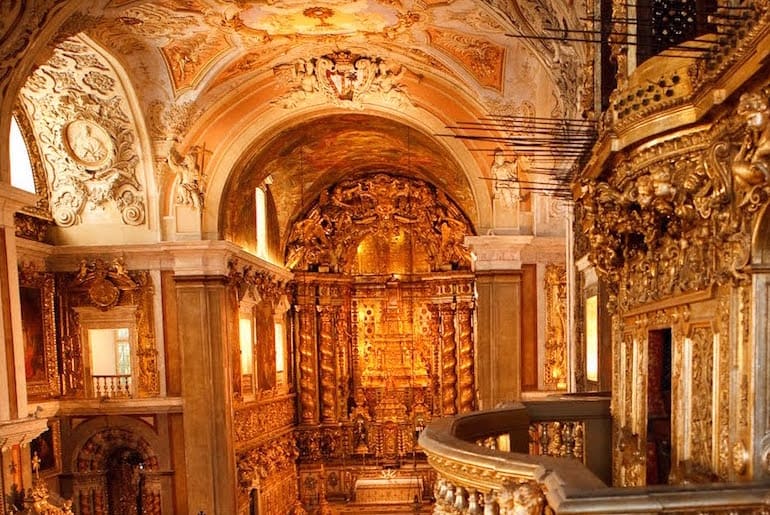
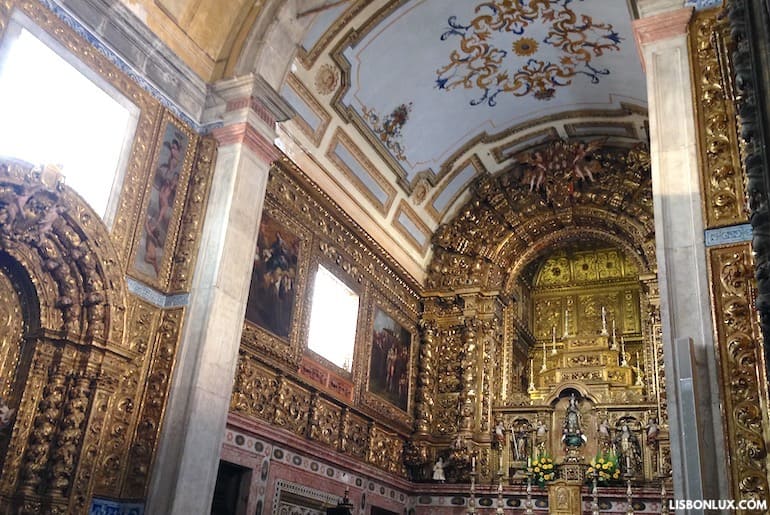
Gilding from 1727 fills a large part of this church, from the main altar to the organ. The main altar is considered the most outstanding example of gilded art in Lisbon, and the rococo-style stucco decoration of the ceiling by the Italian Giovanni Grossi one of the most outstanding of its kind in Europe.
Also noteworthy is St. Paul's altar (the first one by the entrance), which mixes the Joanino and the Portuguese styles.
Madre de Deus Church
Rua da Madre de Deus, 4 (Xabregas)
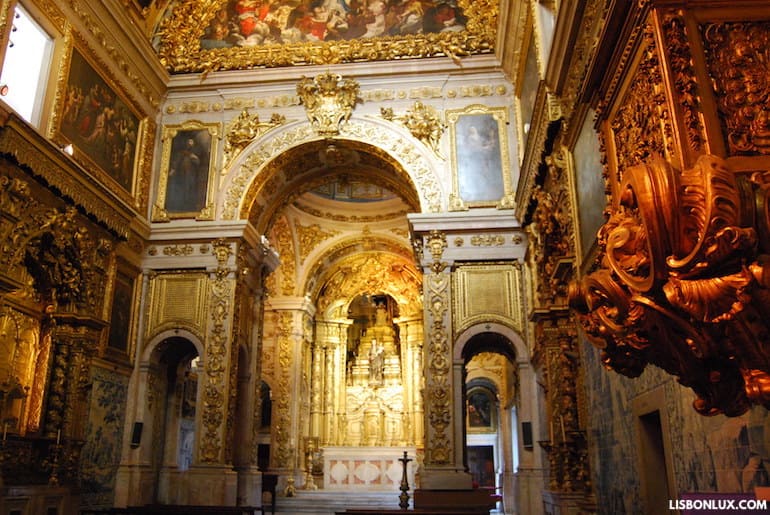
The sumptuous interior of the church of the convent of Madre de Deus is filled with gilding from the 1600s, partly framing paintings by the Portuguese artists André Gonçalves and Cristóvão Lopes. It's a marvelously artistic work, mixing the precious gilding with monumental tile panels.
São Roque Church
Largo Trindade Coelho (Bairro Alto)
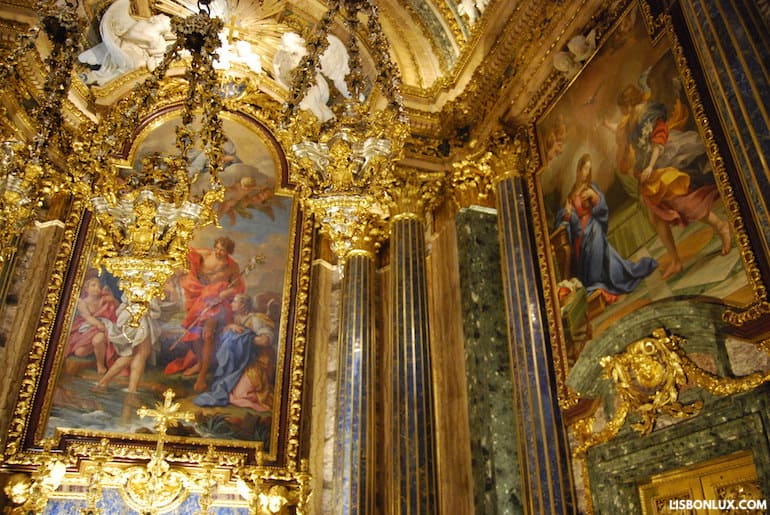
This church not only has some of the most important Roman sacred art in the world, it's also decorated with several notable works of gilded woodcarving. The Chapel of Our Lady of Doctrine is magnificent (completely covered with gold), although it's the Chapel of St. John the Baptist that's considered the most extraordinary masterpiece.
Coaches Museum
Praça Afonso de Albuquerque/Avenida da Índia, 136 (Belém)
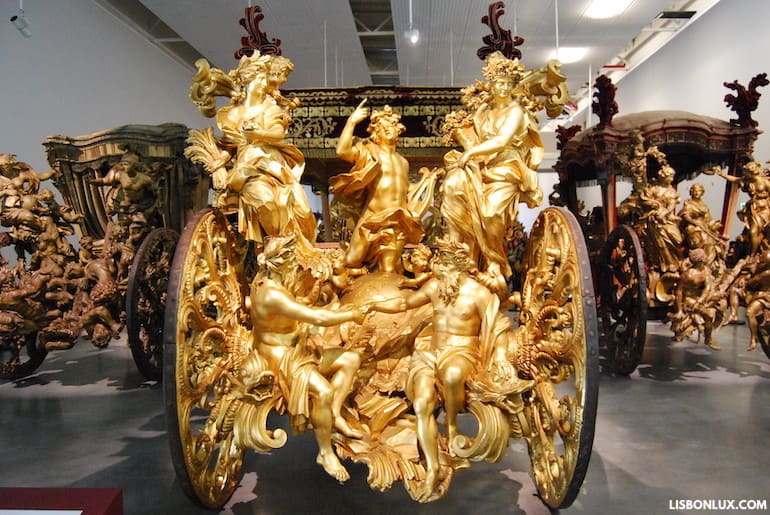
Several incredibly rich gold-covered works stand out in the great collection of the Coaches Museum. They're all ostentatious vehicles, especially those built during the reign of King John V, superior to any others throughout Europe, including those of Louis XIV of France.
Cardaes Convent
Rua de O Século, 123 (Príncipe Real)
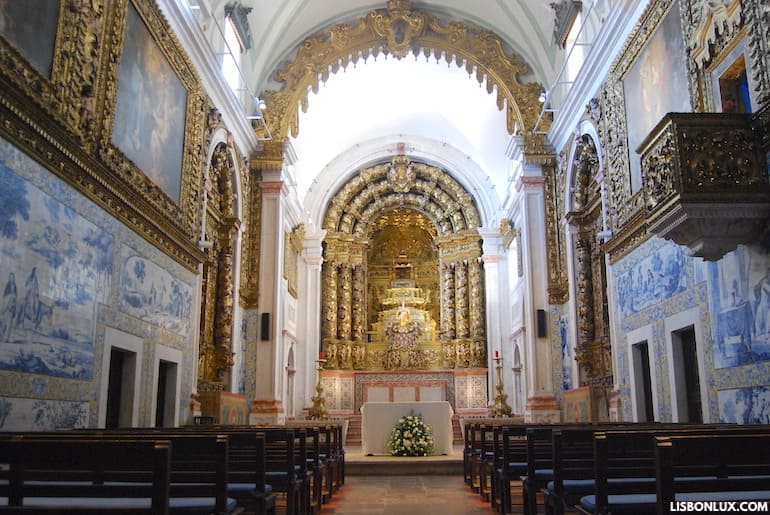
The church of this convent is a milestone of great importance in the development of gilded art in Lisbon. It was completed in 1693, with gilded frames around eight paintings, and gold filling the entire altar which ended up being considered the greatest example of the "Portuguese style" and one of the best preserved.
São Miguel Church
Largo de São Miguel (Alfama)
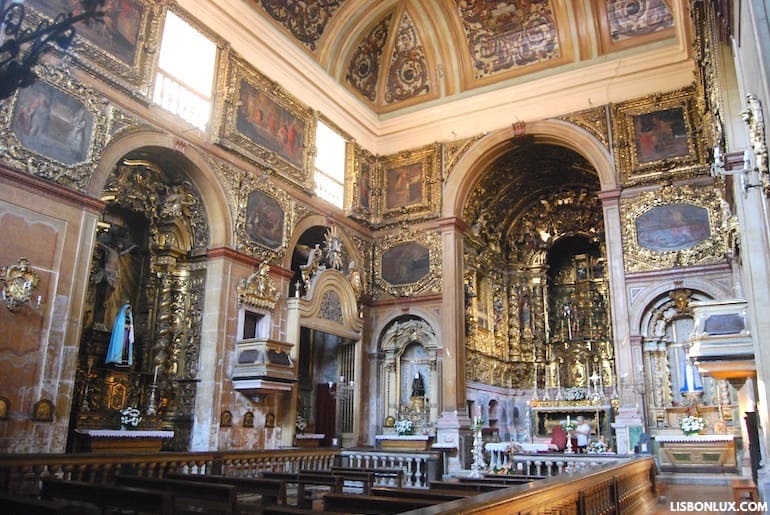
The entire interior of this church is filled with gilded woodcarving, but what's most remarkable is the high altar begun in 1723. It includes images of the Four Evangelists together with other ornamental elements, in a work by two of the greatest master woodcarvers of the time.
Pena Church
Calçada de Santana (Pena)
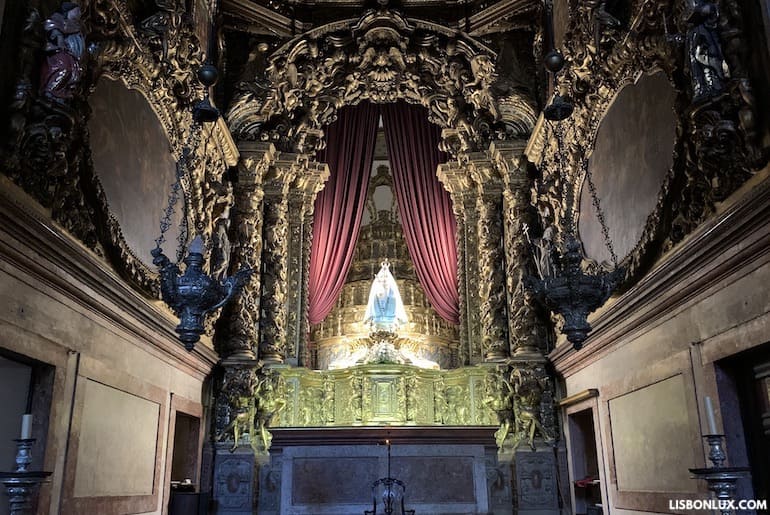
The gilded decoration of this church was an innovation in the early 1700s, becoming the pioneer of the Joanino style in Lisbon. This is where gilding reached remarkable artistic quality, later replicated in other churches.
Encarnação Convent
Largo do Convento da Encarnação (Pena)
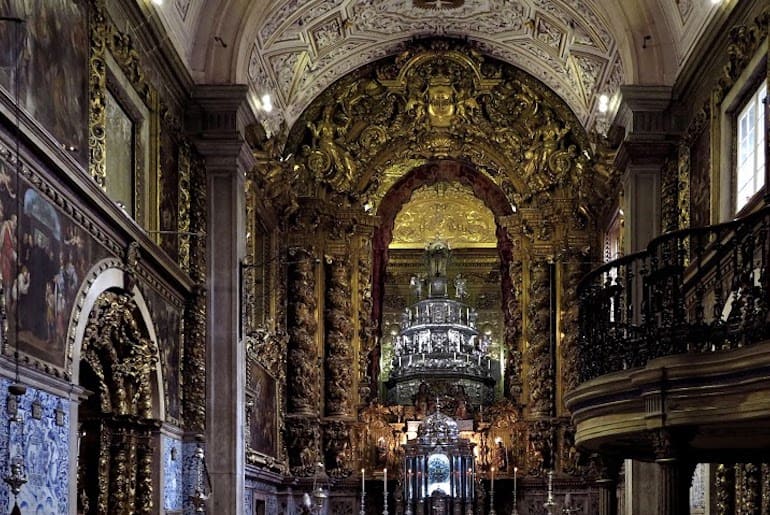
Created in 1719, with magnificent sculpting with the theme of the "Annunciation", the high altar of this church is one of the richest artistic works in Lisbon, mainly for its iconographic significance. The church is part of a convent built in 1630 which suffered some damage in the earthquake of 1755, but was restored in 1758.
The altar is supported by a base of polychrome marbles, while the walls are covered in panels of blue and white tiles. Unfortunately, few people can admire this work of art, as both the convent and the church are not open to the public.
Anjos Church
Avenida Almirante Reis (Anjos)
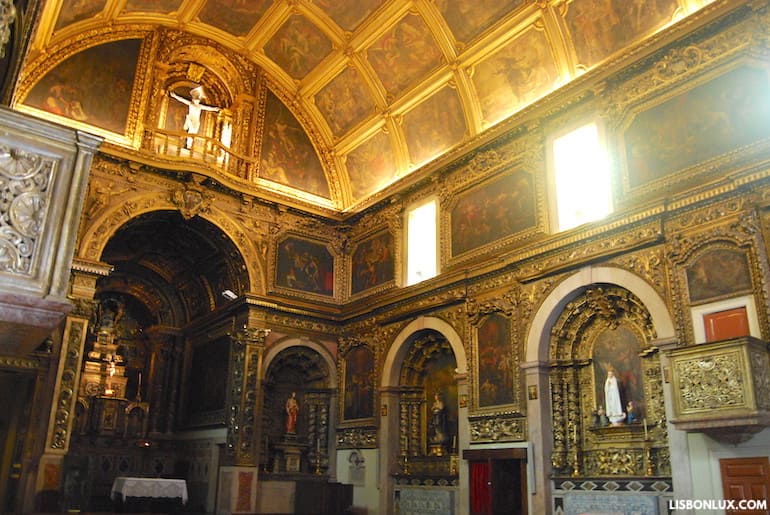
The neoclassical exterior of this church is just over one hundred years old, but the baroque interior dates back to the 1600s. The original building was torn down to make way for Avenida Almirante Reis, but the rich decorative features were preserved. The impressive gilded woodwork covers most of the space, with the exception of some pink marble. There are also several canvases, and paintings from the 1500s.
Marvila Church
Rua Direita de Marvila, 13 (Marvila)
Built as part of a convent, this church was completed in 1680, but much of the interior dates from works started a few years later. Covered in gilt and tiles, it’s a fine example of Portuguese Baroque in Lisbon, very similar to the church of the Convent of Madre de Deus.