THE GUIDE TO LISBON’S 10 MAIN SQUARES
O GUIA DAS 10 PRINCIPAIS PRAÇAS DE LISBOA

PRAÇA DOS RESTAURADORES
A tall obelisk measuring 30 meters (about 100 feet) was placed at the center of this square in 1886. It’s a square mostly frequented by tourists who look for the tourism office in the beautiful Foz Palace or head to Hard Rock Cafe. Others stop for an ice cream at Veneziana or sit on the terrace of Pinóquio restaurant. The former Eden Theatre with its Art Deco façade is now a hotel and there are still two other large hotels, the historic Avenida Palace and the more modern Altis Avenida.
Um alto obelisco com 30 metros de altura inaugurado em 1886 encontra-se no centro desta praça. É sobretudo frequentada por turistas que se dirigem ao posto de turismo do belo Palácio Foz ou ao Hard Rock Café. Outros param para um gelado na Veneziana ou ficam na esplanada do restaurante Pinóquio. O antigo Teatro Eden com a sua fachada Art Deco é agora um hotel e há ainda outros dois grandes hotéis, o histórico Avenida Palace e o mais moderno Altis Avenida.

ROSSIO
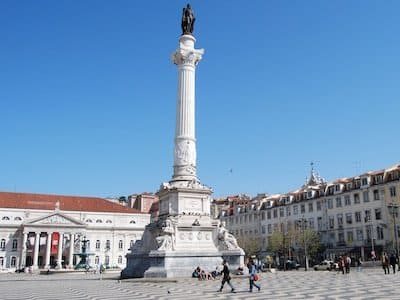
Known for its undulating cobblestone patterns first created in 1848, this square has the official name of Dom Pedro IV but everyone knows it as Rossio. It was one of the first spaces to be decorated with this type of pavement which has become so emblematic of Portugal. On the north side is the National Theater D. Maria II and two monumental fountains are at the center. The historic cafés Nicola and Suiça also survive with their terraces attracting tourists, as does the curious Chapelaria Azevedo Rua. Overlooking it all are Hotel Metropole and the Internacional Design Hotel.
Conhecida pela calçada com padrões ondulantes colocada pela primeira vez em 1848, esta praça tem o nome oficial de Praça de D. Pedro IV mas todos a conhecem por Rossio. Foi um dos primeiros espaços a ser decorado com este tipo de pavimento que se tornou tão emblemático de Portugal. No lado norte fica o Teatro Nacional D. Maria II e ao centro duas fontes monumentais. Os históricos cafés Nicola e Suiça também sobrevivem com as suas esplanadas cheias de turistas, assim como a curiosa Chapelaria Azevedo Rua. Com vista sobre tudo isto estão os hotéis Metropole e Internacional Design Hotel.

PRAÇA DO COMÉRCIO
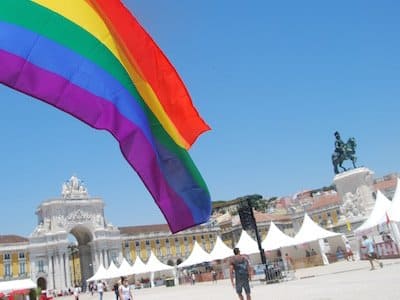
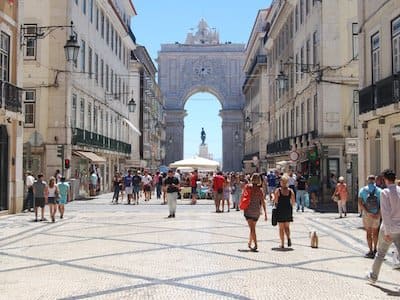
It’s Western Europe’s largest royal square (the second largest in the continent after St. Petersburg’s Palace Square), created after the 1755 earthquake. The arcades that surround it were once home to government offices for many years but are now mainly occupied by cafes and restaurants. The most famous of those is Martinho da Arcada, the oldest café in the city and a favorite of poet Fernando Pessoa.
On the north side is a triumphal arch and to the south are two turrets facing the Tagus. This was the noble gateway to Lisbon where heads of state disembarked, and the marble steps of the pier are now usually occupied by tourists who sit admiring the scenery.
At the center of the square is a bronze equestrian statue of King José I unveiled in 1775.
The city’s history is told at the Lisboa Story Centre in the east wing which also offers cafés that allow you to relax with the river as a backdrop (Can the Can, Populi and Museu da Cerveja)
É a maior praça real da Europa ocidental (a segunda maior do continente depois da Praça do Palácio de São Petesburgo), desenhada após o terramoto de 1755. As arcadas que a circundam albergaram durante muitos anos vários ministérios mas são hoje ocupadas sobretudo por cafés e restaurantes. O mais famoso é o Martinho da Arcada, o café mais antigo da cidade e um dos preferidos do poeta Fernando Pessoa.
No lado norte fica um arco triunfal e a sul estão dois torreões também virados para o Tejo. Esta era a entrada nobre de Lisboa onde chefes de estado desembarcavam, e os degraus em mármore do Cais das Colunas são hoje ocupados por turistas que admiram a paisagem.
No centro da praça vê-se a estátua equestre em bronze de D. José I colocada em 1775.
A história da cidade é contada no Lisboa Story Centre na ala nascente. Aí também se encontram espaços de restauração que permitem ficar a descansar na companhia do rio, como o Can the Can, o Populi e o Museu da Cerveja.

PRAÇA DO MARQUÊS DE POMBAL
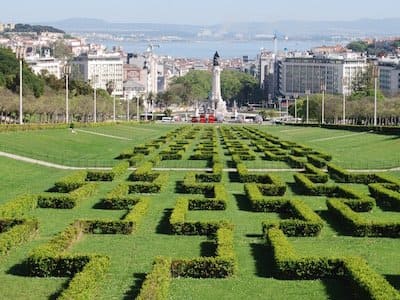
This square is where the old center meets the modern city. In the middle is a monument erected in 1934 to honor the Marquis of Pombal, the statesman responsible for the rebuilding of Lisbon’s downtown after the 1755 earthquake. His image stands at the top of a pedestal, facing his creation towards the river. Hotels and offices surround the square, while Edward VII Park is seen to the north and Avenida da Liberdade to the south. Worth visiting: the art exhibitions of BES Arte e Finança gallery.
Esta praça é onde termina o centro histórico e começa a cidade moderna. Ao centro ergueu-se um monumento em 1934 em homenagem a Marquês de Pombal, o estadista responsável pela reconstrução da Baixa após o terramoto de 1755. A sua imagem encontra-se no alto de um pedestal, virada para a sua obra até ao Tejo. Hotéis e escritórios rodeiam a praça, tendo o Parque Eduardo VII a norte e a Avenida da Liberdade a sul. A visitar: as exposições no BES Arte e Finança.

PRAÇA DA FIGUEIRA
Currently serving mostly as a tram terminal, as an underground car park and skate park, this square was once the city’s main marketplace. A covered market built in 1885 was demolished in the 1950s and later a bronze equestrian statue of King John I was erected in its place.
The four-story buildings (many of them in need of renovation) are occupied by hotels and cafes, with the Confeitaria Nacional being an essential stop. The biggest curiosity is the lovely Doll Hospital while the more recent resident is the Beautique Hotel and its Honra by Olivier restaurant.
Atualmente usada mais como terminal de elétricos, como parque de estacionamento subterrâneo e pista de skate, esta praça chegou a ser o principal mercado da cidade. Um mercado coberto construído em 1885 foi demolido nos anos 50 e mais tarde foi colocada uma estátua equestre em bronze de D. João I.
Os edifícios de quatro andares (muitos deles a aguardar obras de reabilitação) são ocupados por hotéis e cafés, sendo a Confeitaria Nacional visita obrigatória. A maior curiosidade é o encantador Hospital de Bonecas e o residente mais recente é o The Beautique Hotel com o restaurante Honra by Olivier.

PRAÇA LUÍS DE CAMÕES
This square dedicated to Luis de Camões has a monument at the center with an image of the poet dating from 1867. Behind it is an 18th-century building now housing the Brazilian consulate, while on the south side is one of Lisbon’s most emblematic hotels, the Bairro Alto Hotel (worth entering to enjoy a beautiful view of the city from the rooftop bar). You’ll also find a Padaria Portuguesa, a branch of the local chain of bakeries known for its delicious “Pão de Deus” pastry. Alternatively, there’s the kiosk serving refreshments in the open air.
Esta praça dedicada ao poeta Luis de Camões tem ao centro um monumento com a sua imagem inaugurado em 1867. Por trás está um edifício pombalino onde se encontra o consulado-geral do Brasil e no lado sul está um dos mais emblemáticos hotéis da cidade, o Bairro Alto Hotel (vale a pena entrar e desfrutar de uma bela vista de Lisboa desde o bar no terraço). Aqui também se encontra uma Padaria Portuguesa, um dos espaços da cadeia que é especialmente conhecida pelos seus deliciosos pães de Deus. Outros preferem ainda ficar no Quiosque de Refresco ao ar livre.

LARGO DO CARMO
This jacaranda-filled square is home to the ruins of Carmo Convent. Built in the 14th century, the monument was partially destroyed in the earthquake of 1755 and today is an archaeological museum. To its left is the headquarters of the National Guard where prime minister Marcelo Caetano took refuge during the 1974 revolution, leading the government to surrender on this spot. To the right is a gate leading to the Santa Justa Elevator. It was also here that the first Portuguese university was founded in 1290, where now stands the Valadares Palace descending Calçada do Sacramento.
In front of the convent is a drinking fountain from 1771 which provided water from the Águas Livres Aqueduct. Today it’s surrounded by café terraces, and mostly recommended is Chá do Carmo for a tea break and a visit to the beautiful Sapataria do Carmo shoe store.
On the northwest corner of the square is the Lisboa Carmo Hotel.
Este largo embelezado por jacarandás é onde se encontram as ruínas do Convento do Carmo. Construído no século XIV, foi parcialmente destruído no terramoto de 1755 e é hoje um museu arqueológico. No lado esquerdo do convento encontra-se o quartel da Guarda Nacional Republicana onde de refugiou o primeiro-ministro Marcelo Caetano durante a revolução de 1974, acabando o governo por se render no local; no lado direito está um portão de acesso ao Elevador de Santa Justa. Aqui foi fundada a primeira universidade portuguesa em 1290 no local onde agora se encontra o Palácio Valadares que desce a Calçada do Sacramento.
Em frente ao convento foi colocado um chafariz em 1771 abastecido pelo Aqueduto das Águas Livres. Hoje faz companhia a esplanadas. Recomenda-se uma pausa para um chá no Chá do Carmo e uma visita à bela Sapataria do Carmo.
No canto noroeste do largo fica o Lisboa Carmo Hotel.

PRAÇA DO MUNICÍPIO
The monarchy came to an end and a new republic was proclaimed on this square on October 5th, 1910. It’s now where official celebrations recalling that date take place every year. At the center is a 10m-high pillory made of marble after the 1755 earthquake, replacing the one that existed previously. The five steps at its base are now used by tourists who stop to relax and admire the cobblestone pavement and the municipal palace. Next to that building is the former St. Julien Church, today the Money Museum.
Foi nesta praça que a república foi proclamada no dia 5 de outubro de 1910 e é aqui que se realizam as comemorações anuais dessa data. Ao centro encontra-se um pelourinho em mármore com 10 metros de altura, erguido depois do terramoto de 1755, substituindo o que existia anteriormente. Os cinco degraus na sua base são hoje usados por turistas que ficam a descansar e a admirar a calçada da praça e o edifício dos Paços do Conselho. Ao lado vê-se a antiga Igreja de São Julião, hoje Museu do Dinheiro.

LARGO DE SÃO CARLOS
Baptized with the name of the theater built here in 1793, this square is also known for being the birthplace of poet Fernando Pessoa. Two of the city’s best restaurants (Belcanto and Largo) face the theater, as do a Marc by Marc Jacobs and Godiva store. For several weeks during the summer the square hosts outdoor concerts.
Batizado com o nome do teatro aqui construído em 1793, este largo é também conhecido por ter sido o local de nascimento do poeta Fernando Pessoa. Dois dos melhores restaurantes da cidade (o Belcanto e o Largo) encontram-se virados para o teatro, assim como as lojas Marc by Marc Jacobs e Godiva. Durante várias semanas durante o verão o largo é palco de espectáculos ao ar livre.

PRAÇA DE SÃO PAULO
It’s been a sad case of neglect over the last few years but there are currently signs of a rebirth. The Cais do Sodré district has been revived through new bars and restaurants, and a good choice for petiscos (“tapas”) is Taberna Tosca which faces the square and its 18th-century church. This is a square with a beautiful symmetrical harmony but unfortunately many of the buildings that surround it are abandoned despite their beautiful interiors.
Tem sido um caso triste de abandono ao longo dos últimos anos mas há sinais de renascimento. O bairro do Cais do Sodré tem vindo a reanimar-se através de novos bares e restaurantes, e um bom restaurante de petiscos (Taberna Tosca) encontra-se agora virado para esta praça e para a sua igreja pombalina. É uma praça com uma bela harmonia simétrica mas infelizmente muitos dos edifícios que a rodeiam estão devolutos apesar dos seus belos interiores.
LINK: http://www.lisbonlux.com/magazine/the-guide-to-lisbons-10-main-squares/